

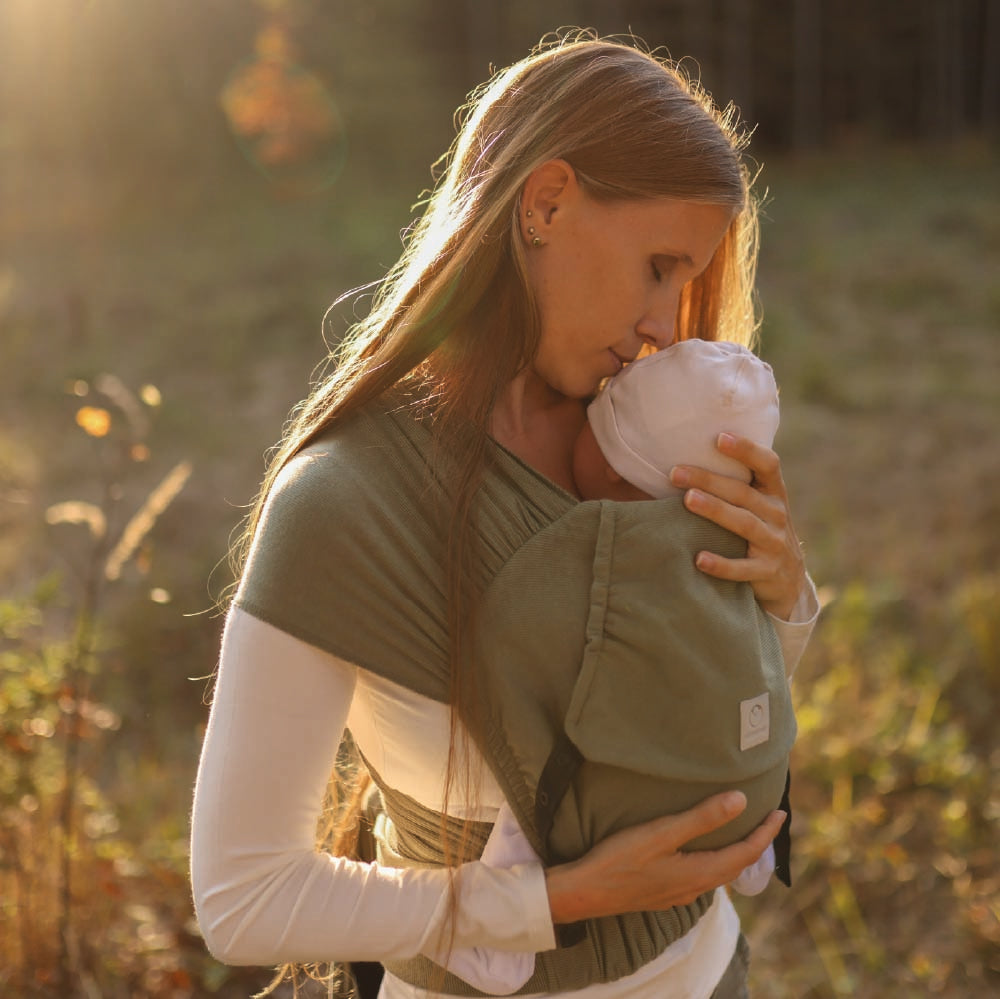
5 good reasons to babywear your little one
With the birth of your baby, so much changes and your everyday life will be completely different from before. For your baby, it's now very important to be held a lot, to cuddle, and to continue feeling the heartbeat of both mom and dad. For nine months it was gently rocked in the warm belly, and its needs were met immediately.
Sometimes the first few weeks can feel very demanding. The little one cries a lot because birth needs to be processed. As a mom, you might still be struggling with pain or breastfeeding issues. That's why it's so important to use the postpartum period and, as the name suggests, 'stay in bed'.
After this time, mom often feels better and everything has settled into a routine. Yet your little sunshine still doesn't want to be put down and only wants to be carried? Don't worry, this is completely natural and is rooted in human nature. From an evolutionary perspective, humans are carriers of their young. The first months after birth are also called the '4th trimester'. So don't be afraid – you're not spoiling your baby by carrying it a lot. This brings us to our first point:
Humans are naturally carriers of their young
It's in our genes – a baby's nervous system needs close physical contact. Think back to the Stone Age. If parents back then had simply left their babies lying in the hut, the crying would have attracted dangerous animals. Even today, all indigenous peoples carry their babies. By carrying your baby, you regulate its breathing, heartbeat, and temperature. Plus, carrying has a positive effect on your baby's digestion. And: carrying has a positive effect on your baby's brain development. Also, the baby's signals are recognized at an early stage – so it often doesn't get to the point of crying because it's hungry, for example.
So why is there even a stroller? The first stroller was manufactured starting in 1840. From that day on, the stroller was marketed to mothers as THE mode of transportation. Advertising slogans like 'Facts that no mother can ignore' forced 'modern women' to use it. Unfortunately, since then, the prejudices and myths against babywearing have only grown and become more and more curious.
From "babywearing is harmful" to "babywearing spoils your baby" and for heaven's sake you absolutely don't want to raise a tyrant – it's been – and still is! – all over the place. The book "The German Mother and Her First Child" unfortunately didn't help matters from 1934 onwards. Many of these myths persist stubbornly – after all, our grandparents learned it that way and passed it on to our parents. Meanwhile, there are countless studies that debunk all these myths and prejudices.
Babywearing protects the hands and back of the wearer
All parents carry their babies – usually in their arms. But this becomes painful very quickly – your arms and back hurt. However, you can't put your baby down because it needs your closeness. Many parents despair in such situations, wondering if their little one is the only one who constantly wants to be carried around. You can rest assured – this behavior is, as mentioned above, completely natural in babies. So when the time comes when you feel you're no longer meeting your baby's need for closeness, it's time for a baby wrap or a baby carrier. Because this way you can meet your baby's natural need and your own need for some freedom.
And that's not all: you have your hands free to care for other siblings, take care of household chores, or run errands. Evening crying spells can be eased with babywearing in a wrap – your little one is close to you and can feel your heartbeat.
Moreover, babywearing can enable your need for freedom and flexibility – walks, strolling through the city, visiting friends become peaceful because your baby feels your closeness.
Babywearing promotes physical and psychological development
How does it work? Babywearing has a positive effect on the healthy development of your child's hip joint – provided the natural tuck position is properly supported. Additionally, babywearing can counteract positional head deformation. Your baby's sense of balance is trained through constantly changing movements, and all other senses like sight, taste, and hearing are also developed.
How can babywearing psychologically support your little one? Your baby experiences themselves as a family member who is approached with respect – which again means that you can recognize your baby's needs very early on. They also feel loved, secure, and the bond is significantly strengthened. And that leads us to the fourth point:
Babywearing strengthens the bond
Ever heard of the bonding hormone oxytocin? It's known as THE love hormone and is responsible for our interpersonal relationships. At birth it promotes contractions and supports milk production. Additionally, it helps stress be processed better and allows you to feel more relaxed.
All of these factors naturally apply to your baby too – bonding is strengthened and they can better process overstimulation and stress. That's why you should always carry your baby facing you – because this way they're not exposed to further stimuli and won't become even more overwhelmed. As your baby grows and wants to see more, you can carry them on your hip or on your back.
Studies have shown that carried babies usually develop a more secure attachment to their parents than those who are not carried. Why is that? As mentioned above, when you carry your baby, you as parents can respond to their signals more quickly and sensitively. They feel safe.
Why is secure attachment so important? This attachment can also be called basic trust – and it's precisely this basic trust that develops in the first months of life. Therefore, it's essential that babies experience closeness, love and care in their first year of life. Often, babies may not always be able to be carried close to the body due to, for example, premature birth, operations, or the decision of the biological mother.
Many hospitals now offer bonding opportunities, and more and more foster families are using babywearing. Often, childcare outside the home becomes necessary – here too, it can be very helpful if children are carried in daycare and if parents at home focus on building a secure attachment with their baby.
Basic trust helps your baby grow into a healthy and confident person. This also includes developing positive self-esteem and becoming "capable of love" – meaning they can build good attachments with other people too.
Building basic trust is actually quite simple: by meeting your baby's needs, you strengthen the bond and basic trust. Unfortunately, in our fast-paced and hectic times, it's often not so easy to walk the fine line between career, family, hobbies and friends.
"It takes a village to raise a child" (Nigerian proverb)
Family situations have changed – in the past, multiple generations lived together and mothers were always supported and relieved of some responsibilities. And that's exactly what families need today too. You need your village. Whether it's family, or if they're not within reach, a borrowed grandma, friends who also have children and support each other, or a household helper who comes once a week to keep everything clean. Because when you have that support, you as parents can relax and fully respond to your baby's needs.
Your baby's needs are actually quite simple: food, sleep, a clean diaper, and closeness with Mom and Dad. As parents, you'll grow into your role and learn when your baby needs what. And each time you fulfill a need, your baby learns that they are cared for and that someone is there when they need something. And that's how you strengthen your baby's sense of security and trust.
Do you have a baby who cries constantly, or simply don't know why they won't go into the baby wrap, or are your nights just extremely short and you feel like you're falling asleep instantly? Get help from a midwife to process any birth trauma. A visit to a specialized cranio-sacral therapist can also help resolve any blockages that might cause your baby discomfort. And of course, you should seek support from a babywearing consultant who will show you how to carry your baby properly. They'll also help you find the rightbaby wrap, the right wrapping technique, or a baby carrier to suit your needs.
And very importantly for you as a mom: postpartum depression requires psychological support. Far too often, baby blues are confused with postpartum depression, and this can have serious consequences for you as a mom and also for your bond with your baby. That's why you should talk to your partner about the signs of postpartum depression so he can recognize it early on too.
Babywearing means freedom, flexibility, and mobility
Whether you live in the big city, in the countryside, or in the mountains – strollers often present obstacles in your way. Be it the escalators at subway stations, the cramped trams and buses, or the stroller-unfriendly walking paths. When you carry your baby, you're completely free to go wherever you want. You don't have a bulky item to stuff into your already small car, and you still have room in your trunk for a suitcase, a picnic, groceries, or your beloved four-legged friend, who can't be left behind under any circumstances.
But why is this freedom so important to many parents? First, it's often the pressure from society – on Instagram, the "big stars" convince us how fit they are just a week after giving birth. They party, go shopping, and their bodies look like they never had a child. What I can definitely tell you as a mom: these mothers will come home and collapse into bed exhausted. Breastfeeding usually won't work because stress inhibits milk production. Not to mention the pain of afterpains, possible birth injuries, and sore breasts.
Don't be fooled by this appearance! It's natural to just stay in bed for the first 2 to 3 weeks. You can and SHOULD do that. Your family first needs to come together as a unit. Everything is new, the baby needs to settle in, and everything needs to fall into place. Breastfeeding takes time and rest. Get a lactation consultant if you have any problems with it.
Have people bring you food and spend as much time together as possible. Visitors can certainly be turned away, and your phone can take a break too. And only when everything is running smoothly, when mom and baby feel fit enough, and you feel like NOW WE'RE READY – only then should you slowly start with visits and your first walks.
Of course, every family is different, and every mom experiences the time after birth differently. Breastfeeding works better for some babies than others. Take a look at your own situation and decide what's right for your family. But this decision should never be based on outside pressure—it should be tailored to the needs of each individual family member.
Written by Tatjana Kirchweger from LOVINGLY BOUND
Read more
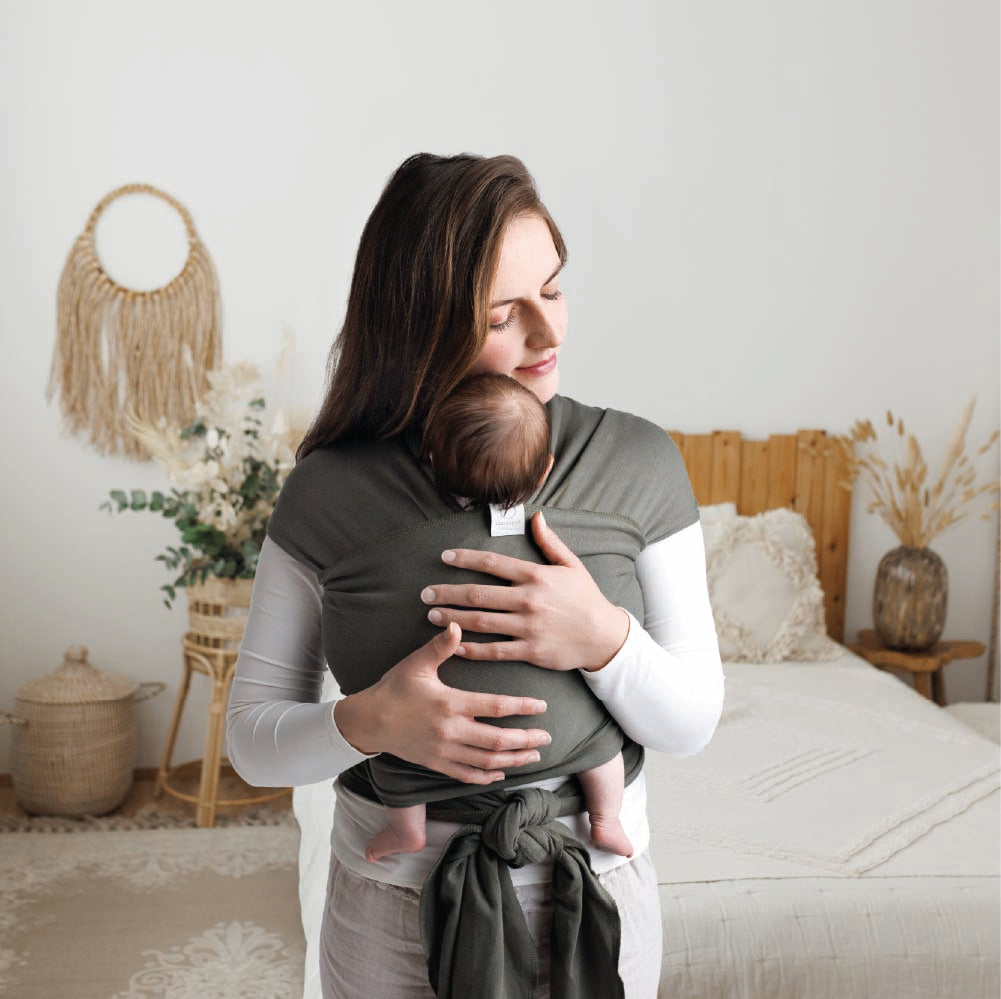
Can premature babies be carried in a baby wrap? Carrying delicate babies and especially premature infants in a wrap is still something many parents do less frequently. Uncertainties about whether i...
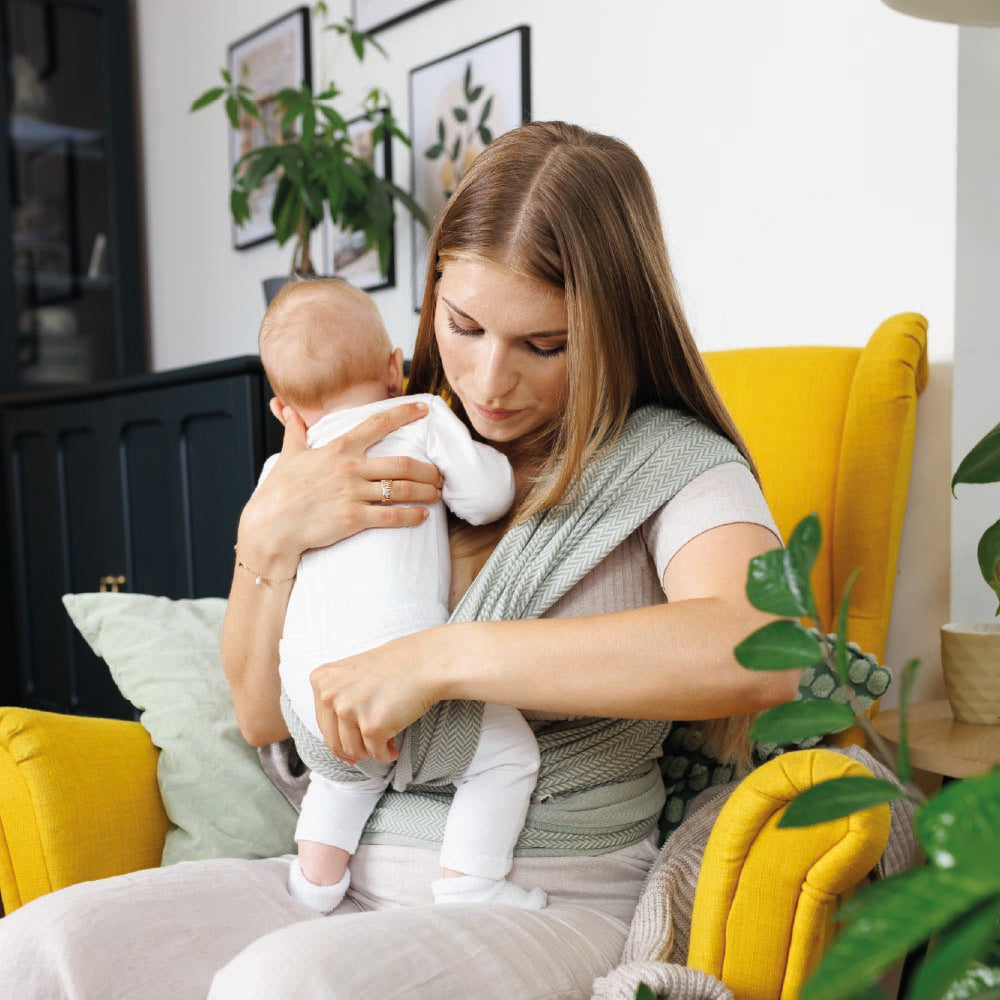
Babywearing in a Wrap During Illness: Closeness for Your Baby Babywearing in a Wrap for Babies or Preemies: Loving Closeness in Times of Illness and Beyond During moments of illness or discomfort, ...