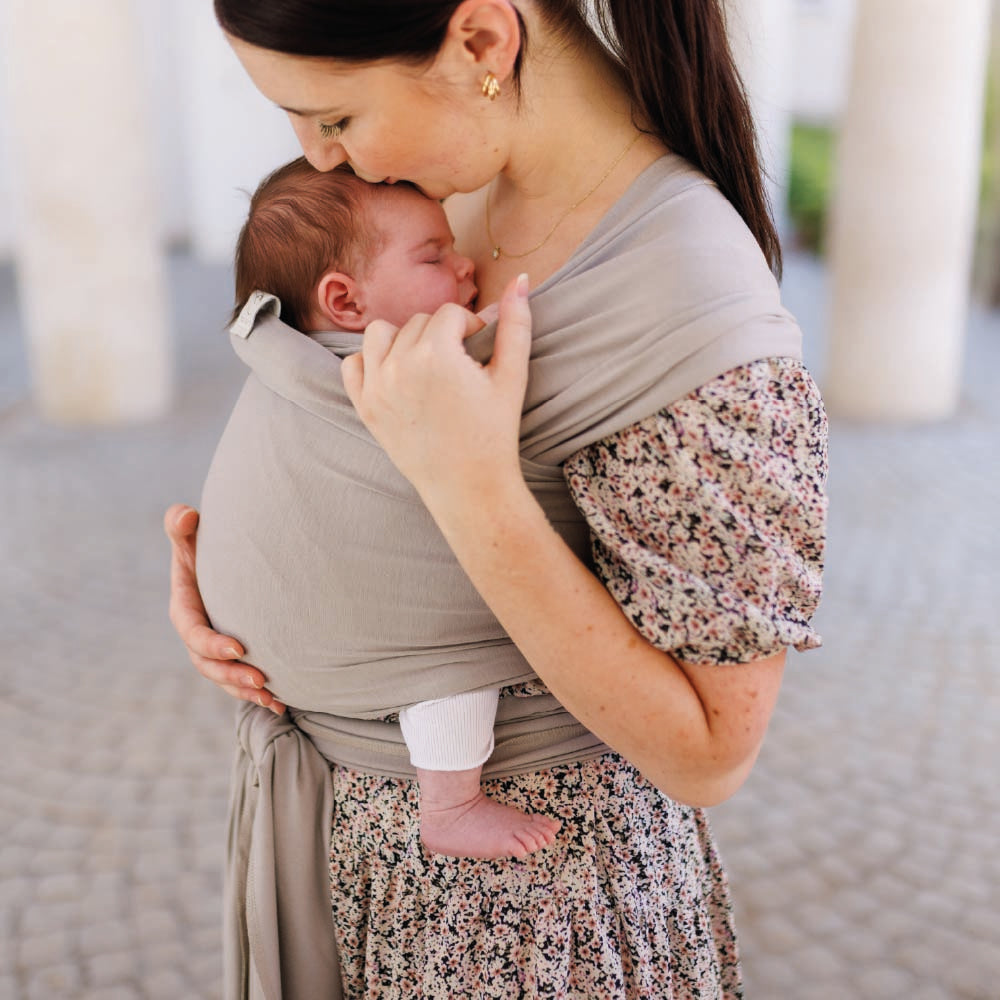
the fear of spoiling your baby
"If you always rush to pick her up, she'll never learn to soothe herself." "If you give him your little finger today, he'll take your whole hand tomorrow." "Why are you carrying a baby all the time? No wonder it cries as soon as you put it down. It has to learn to manage without you at some point." You may have heard statements like these or similar ones before. Right after the table of contents, we'll explain where this fear comes from.
✅ Table of Contents:
- 👶 Where Does the Fear of Spoiling Your Baby Come From?
- 👶 Why We Can't Spoil Babies
- 👶 Closeness Is a Basic Need
- 👶 How Baby Carriers Can Strengthen the Bond Between You and Your Baby
Where does the fear of spoiling come from?
But where does this fear come from that we might spoil the smallest members of our society with too much affection? Especially when we adults usually associate spoiling with nice things. We generally love to spoil our partners, and we ourselves enjoy it when we're surprised with, for example, a delicious breakfast, a massage, or a hot cup of tea after a exhausting day.
The fear of spoiling your baby comes from a time when it was important for children to behave properly. An authoritarian parenting style was normal. And there was little scientifically sound knowledge about child development. Children were often referred to as little tyrants who wanted to manipulate and control their parents.
Today we know that small children and especially babies are not capable of this due to their development. There is now so much valuable knowledge. If we engage with it, it can help us let go of old beliefs and see our children for what they are: at the beginning of their lives, unable to survive without us and one hundred percent dependent on our love and care.
It's important to know that babies never cry without reason. Crying is an important means of communication to alert us that something is wrong. Besides crying, there are of course many other signs you can recognize when something is not right with your baby.
Why we can't spoil babies
Human babies are born with an immature nervous system that is only partially developed. The autonomic nervous system, put simply, consists of two components. On one hand, there's the sympathetic nervous system. It's fully functional from the start and ensures that babies draw attention to themselves in stressful situations. Possible triggers for stress are needs like hunger, comfort, or closeness. For a baby, not meeting these basic needs can ultimately lead to existential anxiety.
And then there's the parasympathetic nervous system, the counterpart to the sympathetic nervous system. It promotes relaxation in stressful situations. However, it's still immature in babies. It develops over time and needs to be trained like a muscle. But how does this training work? To understand this, you don't need to read ten parenting guides or attend a training course. You do it quite intuitively.
When your baby cries, you pick them up and find out what they need. This way, your baby's nervous system can mature. By repeatedly responding to your baby's needs, your child—or rather their nervous system—learns to categorize feelings and needs and can develop their own strategies for dealing with them. It can easily take 2–4 years before your child gradually learns to calm themselves down. Until then, they rely on your co-regulation.
So what happens when you respond to your child's needs and give them the attention they require? When you recognize your baby's needs and satisfy them, and you comfort your baby over and over again, hold them in your arms, talk to them, and lovingly guide them? By doing this, you're not spoiling your baby at all. Rather, you're helping their still-immature nervous system develop well and strengthening it for their future life. And you're making a crucial contribution to building a strong parent-child bond.
Closeness is a basic need
Alongside the need for food, emotional need fulfillment is particularly important for babies. One of these basic needs is the need for closeness. But why is that?
Your baby doesn't know:
that we live in the 21st century and the baby monitor is standing right next to him.
That Mum and Dad didn't move away with the rest of the family and leave him behind, but are only in the next room.
That you don't live in a cave surrounded by wild animals, but in an apartment or house with windows, doors and smoke detectors.
When your baby experiences feelings and needs like loneliness, fear, hunger or thirst – which it cannot yet regulate on its own – it needs the security of knowing that its attachment figures are in close proximity. For example, it draws attention to itself by crying, expecting its caregivers to take care of it and spoil it, of course.
When you as a caregiver recognise what your baby needs and how you can support it, it learns that it can rely on you. Your baby is content and so are you. Over time, you'll learn to recognise what your baby needs more and more quickly. If you have your baby close to you, it will be much easier for you. Make your everyday life easier by carrying your baby. Plus, it's lovely to spoil your baby. Best with theelastic cocoo·me® Sling baby carrier :)
[caption id="attachment_24461" align="aligncenter" width="1000"]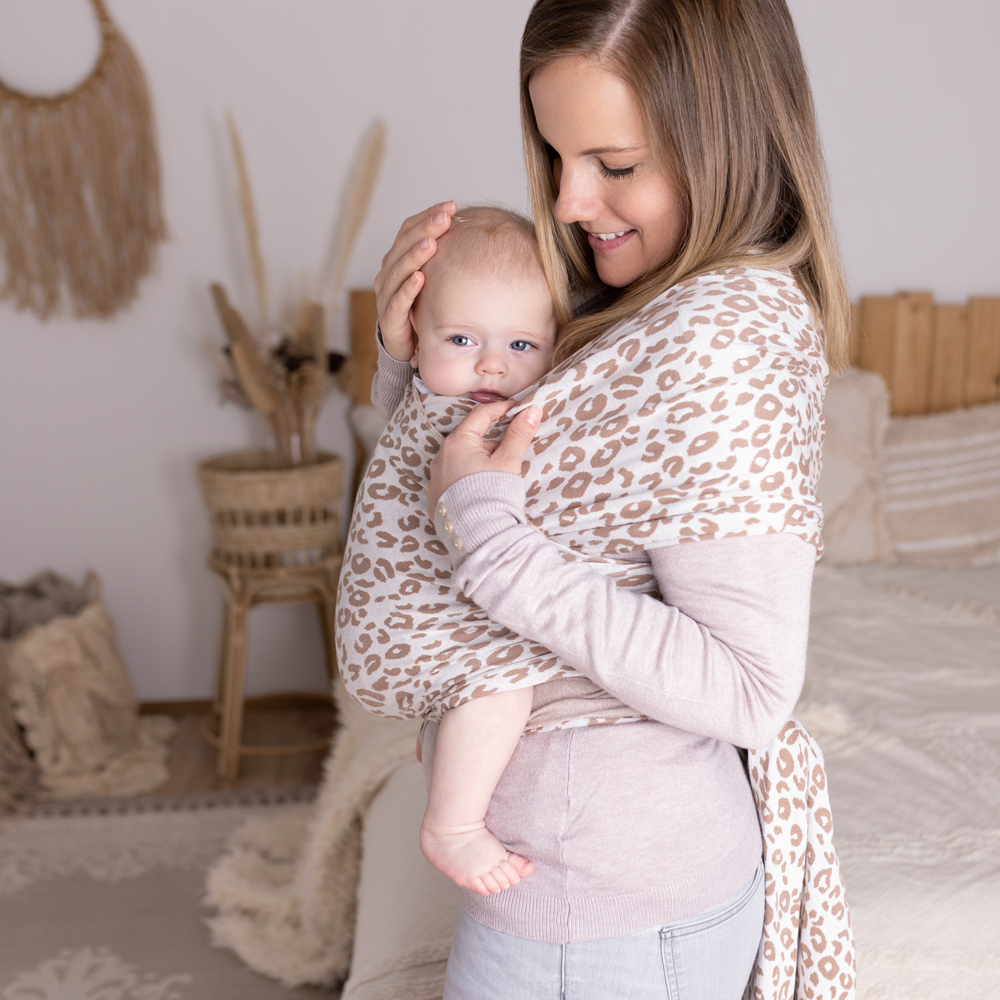 cocoo·me Sling[/caption]
How Baby Carriers Can Strengthen the Bond Between You and Your Baby
Attachment is the emotionally-driven bond that connects one person to another specific person and keeps them together across space and time. John Bowlby.
By consistently and promptly meeting your baby's needs, you'll build an increasingly strong bond with your little one. Your baby learns that they can rely on you.
Human babies are carrying babies. Being carried is what they expect from us. Beyond many other benefits, such as optimal hip maturation and the development of all senses, babywearing can also strengthen your bond with your baby.
When your baby is so close to you, you'll notice the first signs that something's not quite right much more easily. You'll pick up very quickly on when your baby is hungry, tired, or when the world around them becomes overwhelming.
Your baby can also constantly check in with you and rely on your assessment of the situation (for example, when you open the door to the postman or when it suddenly gets louder outside). And they always have the option to withdraw by turning their head away—perhaps because they can't process any more stimuli right now or because they're tired.
Your baby is also integrated into your everyday life. With this direct closeness, you'll both communicate much more with each other and you'll recognize your baby's signals much earlier. It will probably also be much easier for you to shape your everyday life this way, as you'll be far more flexible and free. All of these aspects can have a positive effect on your bond.
So don't worry about spoiling your baby. You can comfort, carry, and let your baby sleep near you whenever they need it, and give them the attention they deserve. Enjoy this precious time!
The blog post "The Fear of Spoiling Your Baby" was written by Laura Janotta (VONBEGINNANGEBORGEN.DE)
- Babywearing Consultant
- Certified FamilySteps® Course Leader
- Specialist for Formula-Fed Infants
- Lactation Consultant
- Baby-Led Weaning Specialist
Images:Gumpinger & Sturm GesbR
http://www.kamerakinderweddings.com