Say Goodbye to Pilling – Methods Against Annoying Fabric Bobbles
Effective Tips & Tricks to Remove and Prevent Pilling
An unpleasant sight on your clothes: lint and small fiber knots, also known as pilling, can affect the appearance of your textiles, especially on garments made from delicate materials like wool. Knit sweaters that we love so much quickly lose their charm when pilling makes them look worn out.
But don't worry, we've compiled tips and tricks for you to remove and prevent pilling. Proper care and gentle handling of your wool clothing is crucial and will significantly help extend its lifespan. In our guide article, you'll now find the best methods to protect your clothes from pilling in the future.
Pilling in Focus: What It Is and How It Develops
The term pilling describes the appearance of fibers that detach from a fabric and form small knots and lint on its surface. These small, annoying fiber knots, also called "pills," are primarily created through mechanical friction, where fiber ends become matted during wear. However, pilling is also common in the washing machine, as fibers here also come into contact with each other through friction and thus form small knots.
Pilling primarily occurs in areas that are subject to intense friction, such as the shoulder area when you frequently wear a crossbody bag. This is due to the use of staple yarns. Unlike synthetic fibers, staple yarns have a limited length, which means they cannot be twisted together as tightly and easily detach from the structure. This creates small fiber balls that accumulate on the surface of the textile. Materials made from wool tend to mat quickly due to this property.
Pilling Predisposition: Which Materials Are Affected – From Wool to Polyester?
Not all materials are equally predisposed to knot formation. Natural fibers such as wool and cotton tend to form lint due to their fiber structure. The short fibers in wool and the loose structure in cotton can more easily fray and lead to the unwanted fiber knots. Synthetic fibers such as polyester and nylon are generally less prone to pilling because their longer fibers and denser structure reduce lint formation.
It is important to note, however, that pilling can occur with any material. Lint formation doesn't necessarily indicate poor quality. In the case of wool, for example, which is more prone to pilling due to its high fineness and relatively short fiber length, this is compensated for by many beneficial properties. Above all, it is very popular in baby and toddler clothing because the high fineness of the fibers gives the material a pleasant feel without being scratchy.
Pure wool is known for its natural temperature-regulating properties, which help ensure that babies and toddlers are neither too warm nor too cold. This is because the fiber has good insulation capacity, which means it warms in winter and can have a cooling effect in summer. Despite these advantages, this high-quality natural material is prone to lint formation due to its short fiber length, but its quality nevertheless remains very high.
By the way:Our cocoome® Baby Wool Walk Overall is made of 100% pure wool from controlled organic animal farming.
[caption id="attachment_29667" align="alignleft" width="349"]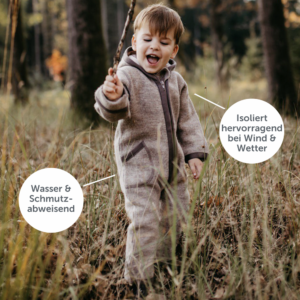 Goodbye pilling // cocoome® Baby Wool Walk Overall[/caption]
👶PSSS: Click here on *cocoome® Baby Wool Walk Overall* and you'll get to ourEU handmadeWool Walk Overall. Thanks to its heat-regulating and breathable properties, our Baby Wool Walk Overall providesperfect carrying comfort. Cozy warmth for your baby and protection from sweating – for every season!
Removing pilling made easy: Tips for optimal care
To keep your wool or cotton clothing, knitwear and more in pristine condition, follow these recommendations for removing fabric pilling and avoid care mistakes.
Recommended measures:
- For effective pilling removal, we recommend an electric fabric shaver with integrated guard blade for safe distance.
- Use a lint comb to gently untangle fibers on natural materials.
- Use lint rollers or special lint brushes to gently remove loose fibers and pilling.
- The "Sweater Stone" works well for brushing over pilled areas and removing fibers.
Not recommended:
- Avoid plucking pilling with your fingers to prevent further fiber breakage and new pilling.
- Household scissors are unsuitable because they are often too dull and imprecise for pilling removal.
- Disposable razors as an alternative to fabric shavers can cause holes in textiles because they often lack a guard blade and use sharp blades.
How can pilling be most effectively prevented? An overview:
Avoid friction: Reduce textile friction by ensuring that your wool or cotton clothing doesn't constantly come into contact with rough surfaces. Don't wear it over bags or backpacks with coarse surfaces.
Lint roller against pilling:Use a lint roller directly after purchase and regularly to gently remove loose fibers and bobbles from the fabric.
Regular brushing with a lint brush:Brush the textile regularly to remove protruding fibers. Be gentle to avoid damaging the intact yarn.
Wash clothes inside out:Washing clothes inside out reduces friction between garments and lowers the risk of pilling.
Use wash bags:Use special wash bags for delicate clothes. These protect garments from friction with other textiles during washing.
Gentle wash cycle and low temperatures:Wash delicate clothes on a gentle cycle with low temperatures. This helps protect the fibers and reduce pilling risk.
Air dry:Avoid using the dryer as it causes additional friction and wear. Let clothes air dry instead.
Use fabric protectant:Some fabric protectants on the market can strengthen fibers and reduce pilling. Always follow the manufacturer's instructions.
Avoid fabric softener:Don't use fabric softener as it can soften fibers, which increases the likelihood of pilling.
Follow the textile's care instructions:To prevent pilling, carefully follow the instructions on the manufacturer's care label. Some textiles require gentle hand washing.
Place the garment in the freezer:Cold can prevent pilling on wool clothing. Place the garment in a plastic bag and freeze for two days. After thawing, wash according to the manufacturer's instructions. Freezing and subsequent washing tighten the fibers, making them less prone to pilling.
👶By the way:Our cocoo·me® Baby Merino Wool Overall comes with the "Wollwikkel Care Lotion", 250ml, included in the delivery (hand wash).
Is pilling a valid reason for a complaint?
The appearance of fuzz and small knots on clothing is usually more of an aesthetic issue and is not necessarily a clear sign of inferior material quality.Therefore, pilling is not considered a valid complaint reason and thus excludes the right to return or exchange.
It's important to emphasize that pilling is considered a natural process that occurs through friction during wearing and washing and does not necessarily indicate quality defects. Therefore, the aesthetic appearance of pilling is regarded as normal wear and tear, which is not accepted as grounds for complaint unless there are extraordinary circumstances that consider the individual return policies of the manufacturer or seller.
Text: Elke Grössler, cocoo·me® Online Editorial