learning to walk while babywearing
Does carrying your baby in a baby wrap affect when they learn to walk?
I don't want to spoil anything here – but even before I started my post "Learning to Walk While Carried," I can tell you now: No!
Why this rumor persists so stubbornly, which factors are important for your baby to learn to walk, and why carrying your baby in a wrap or carrier even supports your baby in this process, I will tell you now in the article "Learning to Walk While Carried."
Learning to Walk While Carried – no carrying, no cuddling, no spoiling?
"In the past" – and the past wasn't all that long ago – people generally thought that you shouldn't carry your baby too much. They didn't want to raise a tyrant, after all. So, all sorts of reasons were invented as to why carrying your baby was bad and what should be avoided as much as possible so that the baby wouldn't get its way. You will learn all about this in the following in my article "Learning to Walk While Carried."
Learning to Walk While Carried: Keep physical contact to a minimum?!
Mothers were encouraged to deliberately ignore their babies' needs – so newborns were left to cry alone in their own rooms in the evenings, were only breastfed (if at all) every 4 hours, and physical contact should be kept as minimal as possible. So no carrying, no cuddling, no building a bond with the child. After all, you shouldn't spoil your child.
Why am I going into so much detail in my article "Learning to Walk While Carried" at this point? Carrying – meaning physical contact – is a basic need of every single human being. For every newborn, baby, toddler, school child, adolescent, and adult. Due to these methods, which – especially in our older generation – still stubbornly persist in our society as "proven" and "correct," we often hear sentences like: "Of course your child isn't walking if you're constantly carrying them" or "It's logical that your child can't fall asleep without your breast if you don't just let them cry so they see that not everyone always dances to their tune."
There have been many investigations, studies – for example, one that examined the generation of war children between 2009 and 2013. The study was conducted in Germany by psychologist Ilka Quindeau and her colleagues from the "Frankfurt University of Applied Sciences" on behalf of the Federal Ministry of Education and Research. The actual content would have been the examination of the effects of bombing raids and flight. But even in the first interviews, it became clear that the family came up much more often, and therefore the study was expanded.
It was concluded that the people showed a pattern of strikingly strong loyalty to their parents. In the descriptions, no conflicts were mentioned at all – this is a sign of a relationship disorder. Similarly, the Austrian-British psychoanalyst Anna Freud discovered as early as 1949 that those children who had a good bond with their parents perceived the war as "less" bad than those who had no or a poor bond with their parents.
I would like to continue my article "Learning to Walk While Carried" with this fact: Not only from our family or acquaintances – no, even pediatricians, midwives, and other specialized personnel – who should actually know better due to today's scientific findings – no, even they do not hesitate to advise mothers to let their baby cry alone, to breastfeed only every 4 hours, and not to carry them, because otherwise the child will never become independent and will, in principle, become a little tyrant. Attachment disorders and the inability to enter into relationships with other people result from these methods.
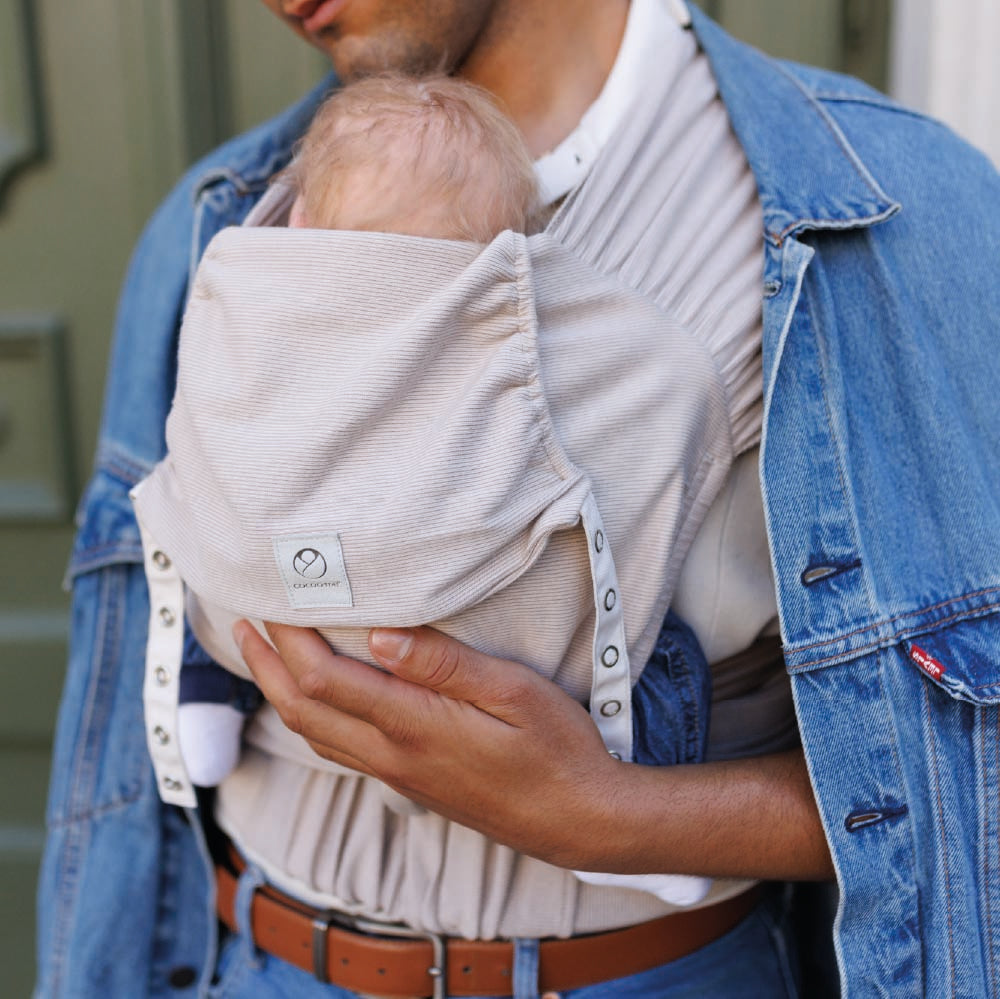
Nature intended for a newborn to be carried. As soon as you pick up your baby, it pulls its legs up and waits for you to sit it on your hip – that's why it's made the way it is. The baby can sit on your hip bone, and the "M-position" allows it to "wedge" itself in well.
Learning to Walk While Carried – carrying is completely natural
So why should something that is naturally intended be bad for your baby? Or their motor development? We know today that carrying is natural. That it helps your baby to perceive themselves and their body boundaries better. A baby that is carried a lot receives everything it needs: physical closeness, affection, it is integrated into family life and actively involved – at eye level. Its sense of balance is trained, as it constantly has to follow and compensate for the movements of the person carrying it. This also promotes muscle development!
The other day, I had to listen to my own mother (I still can't believe it, by the way) say: "Of course your 11-month-old isn't crawling or sitting up if they're CONSTANTLY in the carrier. Other babies play on the floor sometimes" – REALLY? As if my child lives in it. Wait – or does it? I'll just think for a moment about when my baby is NOT in the carrier or wrap: when changing diapers, when eating with the family at the table. When we're sitting on the floor playing with siblings. When we're visiting grandma and grandpa, because it's totally cool to crawl under the hanging shelves in the living room and chase the dog.
My baby is not in the carrier when it clearly shows that it doesn't want to be. And that happens very often at 11 months! I would just say, roughly speaking, my baby is (now) in the wrap for about 2 hours a day. What does it do for the remaining 10 hours it's awake during the day? That's right: it also plays on the floor sometimes. Or in bed. Or sits in the stroller – which, by the way, it has only recently discovered.
I also don't want to withhold this from you in the article "Learning to Walk While Carried": Our baby was infected with a virus during pregnancy, which I "passed on." Even then, we were told that it MIGHT be that we would need physical therapy support. And exactly that has now happened. But it's clear, isn't it? Carrying is (once again) to blame.
My article "Learning to Walk While Carried" continues with this: What factors are now important for your baby's motor development? What does it need to turn, crawl, sit up, and eventually walk?
First of all: your baby already starts to move in the womb. At the latest when a mom in the 38th week of pregnancy no longer knows how to sit because the baby is stretching in all directions and trying to kick its ribs out of the way, you know that.
But motor development is not just about turning, crawling, walking. Your baby has to learn to open its eyes to see and to move its mouth, otherwise it cannot eat, laugh, or speak. Thus, social interaction is also enormously important for motor development: finger plays, singing songs, and interacting together encourage your baby to develop physically and mentally.
Learning to Walk While Carried: Motor Development
Unlike innate reflexes that ensure the survival of the newborn, such as the rooting, sucking, and swallowing reflexes important for feeding, there are some other reflexes that accompany your baby in motor development during the first two years of life: the grasping, stepping, Moro, and neck reflexes. During the mother-child pass examinations, the pediatrician also examines your baby's motor development. This can determine whether a possible neurological disorder or a disease of the nervous system is present, which are usually the cause of a later start to crawling, sitting, walking, etc.
A low birth weight – for example, as a result of premature birth, cerebral seizures or brain damage, psychological problems during pregnancy – for example, because it was unwanted or it was a psychological burden for the pregnant woman, are factors that can affect your baby's motor development.
Gender, siblings, type of birth – i.e., spontaneous or C-section, but also social status have no influence on how quickly a child reaches a "milestone." Much more important than these so-called milestones are actually the "boundary stones." They indicate the age by which the vast majority of "healthy" children acquire a certain ability.
The following questions regarding fine motor skills, gross motor skills, etc., now continue the path in my article "Learning to Walk While Carried":
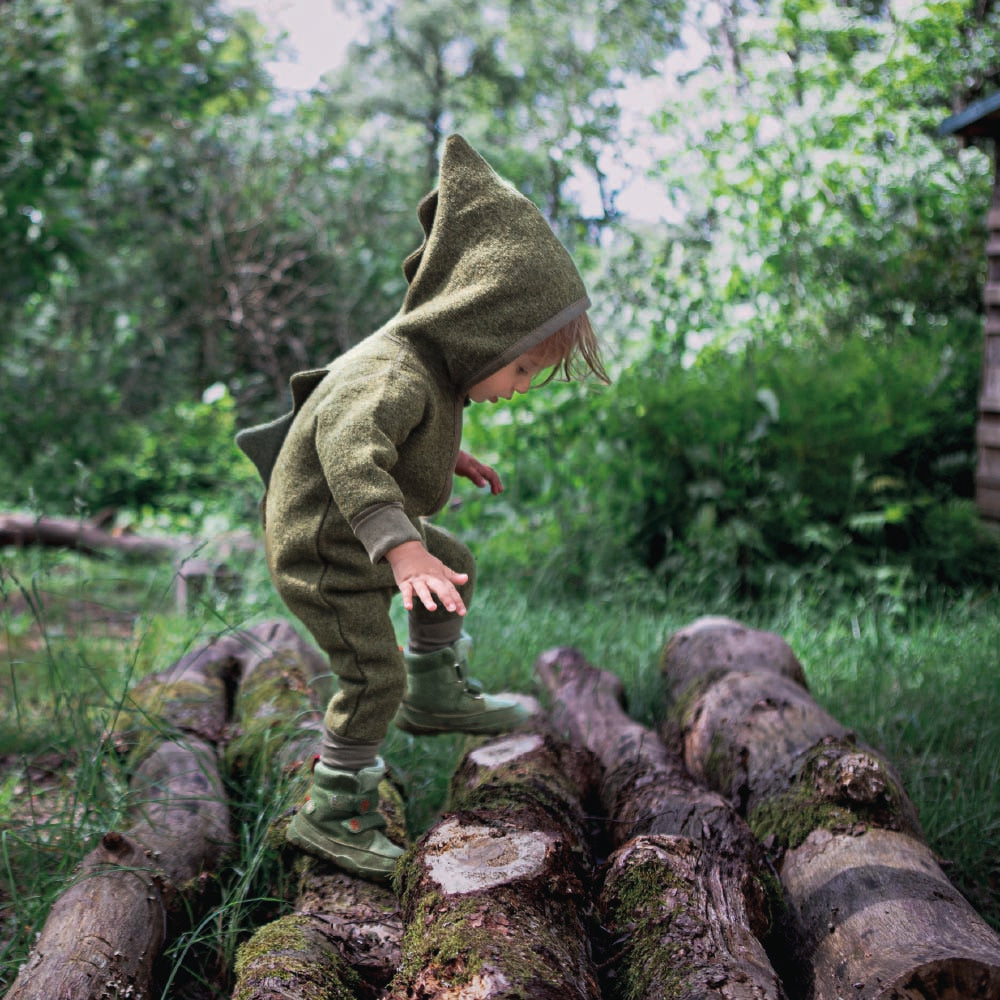
But how can you promote your baby's gross and fine motor skills now? How can you motivate your baby to move? For gross motor skills – meaning body motor skills and locomotion – it is important that your baby has space and room to move and play. It is also important that balance is well developed (which, in turn, is stimulated, promoted, and trained when carrying). Let your baby go barefoot – even in winter. With the right clothing, your baby will not be cold – it is best to check the body temperature in the neck. If it is comfortably warm there, your baby is not cold, even if their feet might be. Barefoot walking promotes balance and helps your baby stand securely.
Normally, it is completely sufficient for your baby to be able to move freely in a room: are there things to pull up on or crawl over/under, and does it have the opportunity to explore everything? Great – then you've done everything right! If your child is really noticeable, you are in the best hands with a pediatric physiotherapist. They will show you targeted exercises to encourage your baby.
With these tips, my article "Learning to Walk While Carried" now continues:
Even simple "Hoppe-Hoppe-Reiter" games or baby swimming, as well as baby massage, can help your baby in their motor development. Fine motor skills – meaning everything that happens with "small" movements of the hands and feet – can be promoted with finger games, motor toys like an O-Ball or motor cube, stacking towers, and shape sorters.
Learning to Walk While Carried: Walkers are superfluous
Door bouncers, baby walkers, and so-called walking aids are absolutely superfluous and even dangerous! Not only do they damage the entire musculoskeletal system, but your baby can fall down stairs, tip over headfirst in a door bouncer, etc. Experts even agree that the use of such devices permanently damages and inhibits children's motor skills and the development of the entire musculoskeletal system.
As you can see – a baby's motor skills are such a complex process in which many factors play a role. To some extent, you can encourage and positively influence the processes. Towards the gradual end of the article "Learning to Walk While Carried," I would like to briefly tell you how it was with our middle daughter: she was carried just as "much" as her little brother is now – and she walked confidently and freely a week before her first birthday.
To conclude the article "Learning to Walk While Carried," I would like to leave you with the following quote:
"You cannot teach a man anything; you can only help him discover it within himself." -Galileo Galilei
So help your baby discover themselves and everything in and about themselves – with love, joy, and the closeness and physical contact your baby needs ♥ I hope I was able to convey all of this well in my blog post "Learning to Walk While Carried"!
The blog post "Learning to Walk While Carried" was written by Tatjana Kirchweger from LIEBEVOLL GEBUNDEN